
How to Improve Communication Skills?
Step
0
Introduction

How to Improve Communication Skills? In an age of constant digital chatter, the art of genuine, effective communication has become both more challenging and more valuable than ever. Communication skills are the bedrock of every successful relationship, career, and personal endeavor. They are not an innate talent reserved for the charismatic few, but a learnable, improvable set of abilities that determine how we are perceived, how we influence others, and how we navigate the world. Whether you’re aiming to lead a team, strengthen a partnership, or simply ensure you are heard and understood, honing your communication skills is the single most impactful investment you can make in yourself.
This comprehensive guide is designed to move beyond theory and provide you with actionable, step-by-step answers to the most pressing questions about communication skills. We will dissect the core components—from active listening and nonverbal cues to assertive speaking and conflict navigation—into practical strategies you can implement immediately. By focusing on the top FAQs that people search for, this article serves as your personal manual for transforming the way you connect, convey, and collaborate. Let’s embark on this journey to unlock the power of your voice and presence.
Top Questions on Improving Communication Skills
Step
1
What are the most effective techniques for active listening?

✅ Answer Introduction
Active listening is the cornerstone of all effective communication skills. It’s the intentional practice of fully concentrating, understanding, responding, and remembering what is being said, moving beyond passive hearing to engaged connection.
✅ Answer Steps:
✅ Step 1: Employ the “Listen to Understand, Not to Reply” Mindset.
Silently pause your internal monologue—the planning of your next point, the judgment, or the rebuttal. Your sole goal is to absorb the speaker’s message and perspective. Mentally reiterate their core points as they speak to stay focused.
✅ Step 2: Use Non-Verbal and Minimal Verbal Encouragers.
Show you are engaged through your body language: maintain soft eye contact, nod slightly, and lean in. Use short verbal cues like “I see,” “Go on,” or “Mmm-hmm” to signal attentiveness without interrupting their flow.
✅ Step 3: Practice Reflective Paraphrasing and Clarifying Questions.
After they finish a thought, demonstrate understanding by paraphrasing. “So, what I’m hearing is that you felt frustrated because the process wasn’t clear.” Follow up with open-ended, clarifying questions: “What part of the timeline was most concerning for you?” This confirms accuracy and deepens the conversation.

The 5-Second Conversation: How to Connect Instantly and Build Trust Fast
In *The 5-Second Conversation: How to Connect Instantly and Build Trust Fast*, renowned communication strategist Sam Gardner reveals the groundbreaking system he used to transform himself from a fumbling entrepreneur into one of New York City’s most sought-after advisors.
Buy Now on Amazon
Step
2
How can I speak more clearly and confidently, especially in public?

✅ Answer Introduction
Clear and confident speaking stems from preparation, mindset, and technique. It’s about managing your internal state to deliver your external message with authority.
✅ Answer Steps:
✅ Step 1: Master Your Material and Structure.
Confidence is born from competence. Know your key points inside out. Structure your message with a simple framework: Tell them what you’ll tell them (introduction), tell them (main body with clear points), and tell them what you told them (conclusion). This creates a safety net for your mind.
✅ Step 2: Manage Your Physiology.
Before speaking, take several deep, diaphragmatic breaths to calm your nervous system. Stand or sit with an open, upright posture to project confidence. Consciously slow down your rate of speech; nervousness speeds us up. Articulate your words fully, and embrace deliberate pauses for emphasis and to gather your thoughts.
✅ Step 3: Practice, Practice, Practice—Out Loud.
Don’t just rehearse in your head. Practice your delivery aloud, in front of a mirror, or record yourself on video. Use tools like Toastmasters or practice with a trusted friend. Familiarity with the sound of your own voice delivering the message drastically reduces anxiety and builds vocal muscle memory.

Don’t Try To Be Perfect Always, Be Consistent: A Journey to Sustainable Success
Don’t Try to Be Perfect Always, Be Consistent: A Journey to Sustainable Successby Sam Gardner is a refreshing take on self-help that guides readers toward achieving lasting success—not through relentless perfection, but through practical, intentional consistency.
Buy Now on Amazon
Step
3
How can I read and use body language effectively?

✅ Answer Introduction
Nonverbal communication skills often speak louder than words. Understanding and consciously using body language, or kinesics, allows you to align your message and interpret others more accurately.
✅ Answer Steps:
✅ Step 1: Learn to Read Clusters, Not Isolated Signals.
A single crossed arm might mean someone is cold, not defensive. Look for clusters of signals. Is the crossed arm paired with a frown, turned-away feet, and minimal eye contact? That cluster more strongly suggests disengagement or discomfort.
✅ Step 2: Align Your Own Nonverbals with Your Message.
Ensure your body language projects openness and congruence. Use the “SOFTEN” model: Smile, Open posture, Forward lean, Touch (appropriate, like a handshake), Eye contact, Nod. Matching your facial expressions and gestures to your verbal message builds trust and credibility.
✅ Step 3: Pay Attention to Proxemics and Paralinguistics.
Respect personal space (proxemics). Notice the tone, pitch, pace, and volume of your voice and others (paralinguistics). A sudden shift in tone or a step backward can signal a change in emotional state that the words might not yet express.

The Push Principle: Ignite Your Action, Execute Your Ambitions, and Build a Life of Unstoppable Momentum.
In The Push Principle, renowned productivity expert Sam Gardner delivers a revolutionary approach that flips conventional wisdom on its head.
Buy Now on Amazon
Step
4
How do I give constructive feedback without offending someone?

✅ Answer Introduction
The ability to deliver feedback that is heard and acted upon is a critical communication skill. The goal is to be helpful, not hurtful, and to focus on behavior rather than personality.
✅ Answer Steps:
✅ Step 1: Utilize the “SBI” or “BIF” Framework.
Structure your feedback to be objective. Use the Situation-Behavior-Impact (SBI) model: “In yesterday’s team meeting (Situation), when you interrupted Sarah while she was presenting (Behavior), it seemed to derail her train of thought and the flow of ideas (Impact).” Alternatively, the Behavior-Impact-Future (BIF) model adds a forward-looking solution.
✅ Step 2: Focus on Specifics and Use “I” Statements.
Avoid vague criticism (“Your attitude is bad”). Describe the specific, observable behavior. Frame the impact from your perspective using “I” statements to reduce defensiveness: “I felt concerned that we might miss some key points,” rather than “You made everyone miss the points.”
✅ Step 3: Collaborate on a Solution and Offer Support.
End the feedback by inviting dialogue. Ask for their perspective: “How did you see that situation?” Then, pivot to the future: “How can we ensure everyone has space to share next time?” or “What support would help with this?” This transforms criticism into a collaborative problem-solving session.

The Authority Code: Build Your Personal Brand and Monetize Your Expertise
The Authority Code: Build Your Personal Brand and Monetize Your Expertise is not another collection of superficial “personal branding” tips.
Buy Now on Amazon
Step
5
How can I become a better conversationalist and avoid awkward silences?

✅ Answer Introduction
Mastering the flow of conversation is a learnable communication skill that builds rapport and makes social interactions enjoyable. It’s about balancing sharing, asking, and listening.
✅ Answer Steps:
✅ Step 1: Master the Art of the Open-Ended Question.
Move beyond yes/no questions that dead-end a conversation. Use questions that start with “What,” “How,” “Tell me about,” or “What was that like?” For example, instead of “Did you like the conference?” ask “What was the most interesting takeaway for you from the conference?”
✅ Step 2: Practice the “Echo and Expand” Technique.
Listen for a key word or topic the other person mentions, “echo” it back with curiosity, and “expand” with a related thought or question. Them: “I just got back from a hiking trip in Vermont.” You: “Vermont! The foliage must have been stunning this time of year. What was your favorite trail?” This shows you’re listening and naturally generates new threads.
✅ Step 3: Have a “Conversation Toolkit” Ready.
Prepare a few versatile, light-hearted stories, observations about your shared environment, or current events (not controversial) to gracefully initiate or pivot a conversation. Remember, silence isn’t always awkward; a comfortable pause can be a sign of a relaxed interaction.

How to Be More Intelligent?
How to Be More Intelligent? 30 Practical Steps to Upgrade Your Mind, Sharpen Your Thinking, and Unlock Limitless Potential Written by Sam Gardner – Bestselling Author New York
Buy Now on Amazon
Step
6
How do I communicate more assertively without being aggressive?

✅ Answer Introduction
Assertive communication skills allow you to express your needs, wants, and boundaries clearly and respectfully, standing up for yourself while valuing others. It’s the balanced middle ground between passivity and aggression.
✅ Answer Steps:
✅ Step 1: Use “I” Statements as Your Primary Tool.
Frame your needs around your own feelings and perspective. The formula is: “I feel [emotion] when you [specific behavior] because [impact]. I would prefer [request].” Example: “I feel overwhelmed when I receive project requests after 6 PM because it impacts my work-life balance. I would prefer if we could discuss new requests during our morning check-ins.”
✅ Step 2: Maintain Confident, Calm Demeanor.
Keep your voice firm but neutral, not loud or shrill. Maintain steady (not aggressive) eye contact. Use a relaxed, open posture. The goal is to project calm conviction. If you feel heated, pause and take a breath before responding.
✅ Step 3: Be Prepared to Repeat and Hold the Line (Broken Record Technique).
If met with resistance or manipulation, calmly and politely repeat your core point or boundary without getting drawn into arguments or justifications. “I understand, but I won’t be able to take on that task after hours.” Consistency signals that you are serious.

Supreme Ego: Mastering the Art of Self-Awareness and Self-Control
In “Supreme Ego: Mastering the Art of Self-Awareness and Self-Control,” renowned self-help author Sam Gardner takes you on a life-changing journey to understand, tame, and ultimately transcend the ego to unlock your true potential.
Buy Now on Amazon
Step
7
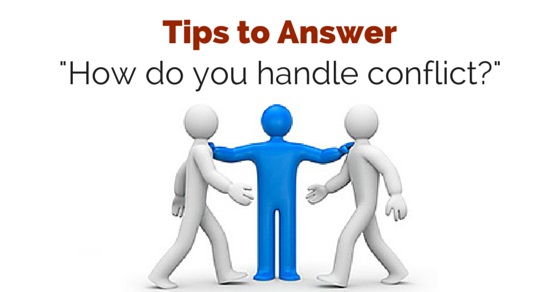
✅ Answer Introduction
Navigating conflict is a high-stakes test of your communication skills. The objective is not to “win,” but to reach a mutual understanding and, ideally, a resolution that preserves the relationship.
✅ Answer Steps:
✅ Step 1: Prepare and Choose the Right Setting.
Clarify your goal for the conversation. Is it to be heard, to solve a problem, or to change a behavior? Choose a private, neutral setting and enough time. Begin by stating your positive intent: “I wanted to talk about X because I value our working relationship and want to make sure we’re aligned.”
✅ Step 2: Focus on Interests, Not Positions.
A position is a demand (“You must always cc me”). An interest is the underlying need (“I need to stay informed to support the team”). Ask questions to uncover their interests: “What’s important to you in this situation?” Look for common ground at the interest level.
✅ Step 3: Practice De-escalation and Validation.
If emotions flare, don’t retaliate. Use de-escalating language: “I can see this is really important to you,” or “Let’s slow down for a moment.” Validate their feelings (“It makes sense you’d feel frustrated”) without necessarily agreeing with their accusations. This lowers defenses and opens the door to problem-solving.

Replace Your Habits
“Replace Your Habits” Unlock Lasting Change: Your Step-by-Step Guide to Replacing Bad Habits with Empowering Routines.
Buy Now on Amazon
Step
8
How can I improve my written communication skills, especially for emails and reports?
✅ Answer Introduction
In the professional world, written communication skills are a permanent record of your competence and clarity. Effective writing is concise, structured, and audience-aware.
✅ Answer Steps:
✅ Step 1: Front-Load Your Message and Use a Clear Subject Line.
Start with your purpose or key conclusion. Don’t bury the lead. Use a subject line that is specific and actionable, e.g., “Action Required: Q3 Budget Approval by Friday,” not just “Budget.” This respects the reader’s time.
✅ Step 2: Structure for Scannability and Clarity.
Use short paragraphs, bullet points, and bold headings to break up text. Each paragraph should have one main idea. State necessary context briefly, then your request or key information. Use a professional but approachable tone.
✅ Step 3: Edit Ruthlessly for Brevity and Tone.
Before sending, revise to eliminate jargon, redundant words, and ambiguity. Read it aloud to catch awkward phrasing. Check your tone—does it sound helpful and collaborative, or curt and demanding? Always run a spell check, but don’t rely on it alone.

How to Kill TOXIC EGO That Ruins Your Life
In “How to Kill TOXIC EGO That Ruins Your Life,” best-selling author Sam Gardner takes you on a transformational journey to recognize, dismantle, and ultimately eliminate the toxic ego that holds you back.
Buy Now on Amazon
Step
9
How do I tailor my communication for different audiences (boss, team, client)?
✅ Answer Introduction
Adapting your message to your audience is a sophisticated communication skill that dramatically increases your influence and effectiveness. It requires empathy and strategic thinking.
✅ Answer Steps:
✅ Step 1: Conduct a Quick “Audience Analysis.”
Before communicating, ask: What do they already know? What do they need to know? What are their priorities and pain points? How do they prefer to receive information (detailed report, big-picture summary, bullet points)? A client may need benefits explained, while your boss may want risks highlighted.
✅ Step 2: Adjust Your Language, Detail, and Channel.
With a technical team, use precise jargon. With a non-technical client, use analogies and plain language. A busy executive might need a one-page executive summary; your direct report might need a detailed step-by-step guide. Choose the appropriate channel: a complex proposal might be an email, a sensitive issue a video call.
✅ Step 3: Frame Your Message Around Their “WIIFM” (What’s In It For Me?).
Shape your communication to answer the audience’s unspoken question. For your boss, frame ideas around strategic goals and ROI. For a team member, frame tasks around skill development and team impact. For a client, focus on solutions to their problems and the value they receive.

DECODING SUBCONSCIOUS MIND
“Decoding the Subconscious Mind” by Sam Gardner is a groundbreaking exploration into the untapped potential of our subconscious mind. In this transformative guide, Gardner delves into the mysteries of the subconscious, unraveling its workings and offering practical techniques to harness its power for personal growth and success.
Buy Now on Amazon
Step
10
How can I communicate better in a virtual or hybrid work setting?

✅ Answer Introduction
Virtual communication skills demand heightened intentionality to overcome the lack of physical presence and prevent misunderstandings that can arise from digital-only interaction.
✅ Answer Steps:
✅ Step 1: Over-Communicate with Clarity and Context.
In the absence of body language and casual “desk-side” chats, you must be explicit. Provide more context than you think is necessary in written messages. Summarize key decisions and action items after a video call in a follow-up email. Err on the side of over-clarifying to ensure alignment.
✅ Step 2: Master the “Video Call Etiquette” Triad.
First, always use video when possible to rebuild nonverbal connection. Second, manage your environment: have a clean, professional background, good lighting, and a quality microphone. Third, be extra disciplined: mute when not speaking, avoid multitasking, and use the “raise hand” feature to avoid cross-talk.
✅ Step 3: Proactively Build Rapport and Check for Understanding.
Dedicate the first few minutes of a call to non-work chat to mimic office socializing. Be deliberate in checking in: “Does that make sense?” or “Can you walk me through your understanding of the next steps?” Use collaborative tools (shared documents, whiteboards) interactively to keep engagement high.

THE CONFIDENCE CODE: UNLEASHING YOUR INNER STRENGTH AND SELF-BELIEF
“The Confidence Code: Unleashing Your Inner Strength and Self-Belief” by Sam Gardner is a transformative guide that empowers readers to navigate the complexities of self-belief, resilience, and personal empowerment.
Buy Now on AmazonConclusion: How to Improve Communication Skills?
Improving your communication skills is not a destination but a continuous journey of self-awareness, practice, and adaptation. The ten core areas we’ve explored—from the deep listening that makes others feel valued, to the assertive clarity that allows you to be respected, to the adaptive strategies for every audience and medium—form a comprehensive toolkit for personal and professional mastery. Remember, every interaction is an opportunity to practice. Start by integrating one step from one FAQ into your interactions this week. Perhaps it’s using one more open-ended question, or structuring your next email with sharper front-loading.
True communication excellence lies in the consistent application of these fundamentals. It requires the courage to be clear, the empathy to seek understanding, and the humility to know there is always room to grow. As you consciously refine these communication skills, you will notice a profound shift: fewer misunderstandings, stronger relationships, greater influence, and a heightened ability to navigate the complexities of human connection. Your voice is your instrument—tune it, practice it, and use it to create the harmony you wish to see in your world. Begin your practice today.
You May Like This Q & A Also
Step-by-Step Guides (Clickerrr Guides)
- How to Improve Communication Skills: 10-Step Guide
- How to Develop a Growth Mindset: A 10-Steps Guide
- How to Change Your Mindset for Success: 10 Steps Guide