
How to Develop a Growth Mindset?
Step
0
Introduction

How to Develop a Growth Mindset? In a world that often feels defined by fixed outcomes and inherent talent, a powerful psychological shift is changing how we approach success, failure, and lifelong learning. This shift is centered on the concept of a Growth Mindset. Pioneered by the groundbreaking research of Stanford psychologist Dr. Carol S. Dweck, the idea of a Growth Mindset proposes that our abilities and intelligence are not static traits but can be developed through dedication, hard work, and effective strategies. This article serves as your comprehensive manual for understanding and cultivating this transformative way of thinking.
Embracing a Growth Mindset is more than just positive thinking; it’s a fundamental rewiring of how you perceive challenges, effort, criticism, and the success of others. It moves you from a “fixed” perspective—where you believe your qualities are carved in stone—to a dynamic view where every experience is an opportunity to grow. This guide is designed to answer your most pressing questions with actionable steps, providing a clear path to build resilience, enhance learning, and achieve more of your personal and professional goals through the power of a Growth Mindset.
Top Questions on Developing a Growth Mindset
Step
1
What is the core difference between a fixed mindset and a growth mindset?

✅ Introduction
Understanding this fundamental distinction is the first critical step in your journey. The difference lies not in your current skill level, but in your core beliefs about where that skill comes from and its potential for change.
✅ Answer Stps
✅ Step 1: Examine Your Beliefs About Origin.
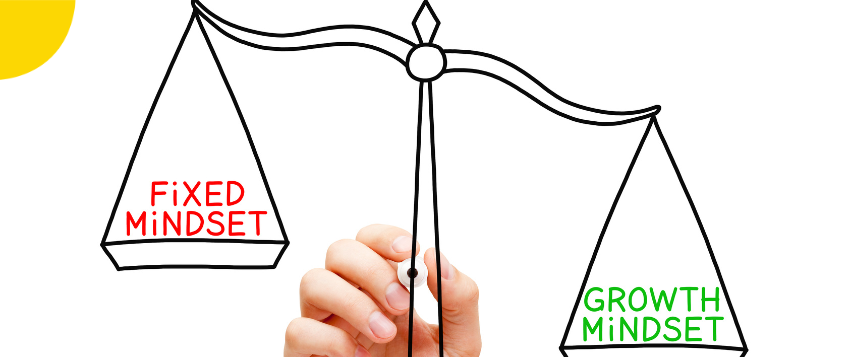
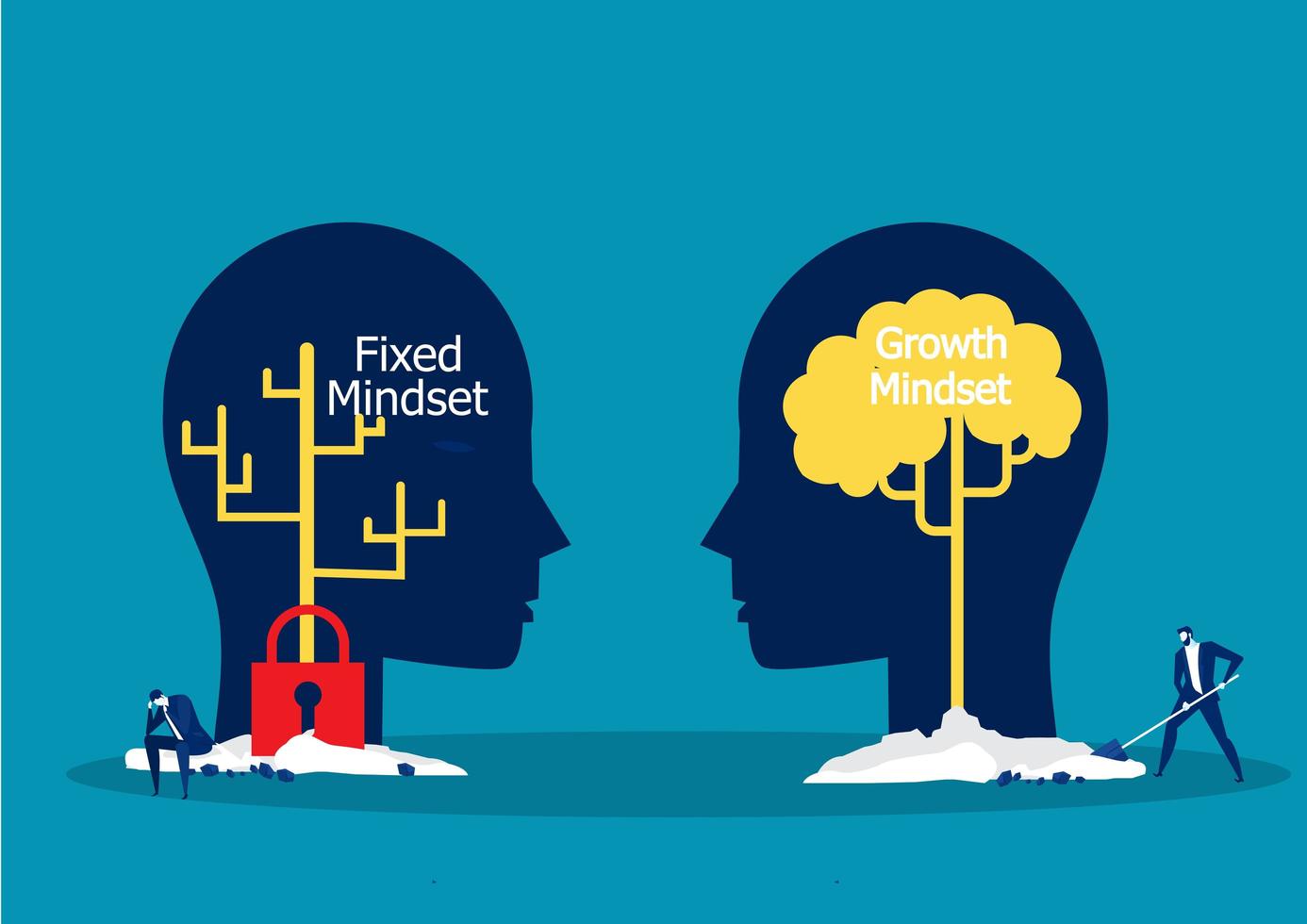
A fixed mindset operates on the belief that intelligence, talent, and personality are innate, static gifts. You either “have it or you don’t.” A growth mindset, conversely, believes these qualities are like muscles—they can be developed through effort, learning, and persistence. The origin is seen as a starting point, not a destiny.
✅ Step 2: Observe Your Response to Challenges.
When facing a difficult task, a fixed mindset triggers avoidance. Failure is seen as a direct reflection of your unchangeable ability, making it a threat. A person with a growth mindset sees the same challenge as an exciting opportunity to stretch their current abilities and learn something new. Effort is the path to mastery, not a sign of weakness.
✅ Step 3: Analyze Your View of Feedback and Setbacks.
For the fixed mindset, criticism is a personal attack to be ignored or defended against. Setbacks are proof of limitation. For the growth mindset, constructive feedback is valuable data for improvement. Setbacks are not failures but informative lessons, essential for growth and refining strategies.

The Big Book of Confidence: Own Your Voice, Command Your Space, Live Your Truth
The Big Book of Confidence is your comprehensive guide to this transformative journey, offering a proven, step-by-step system to own your voice, command your space, and live your truth.
Buy Now on Amazon
The Power of Your Unconscious Mind
Discover how the unconscious mind holds the key to transforming your life. Learn how to harness its power for success, healing, and personal growth. Gain practical insights and techniques to reprogram limiting beliefs and unlock your true potential.
Buy Now on Amazon
Step
2
How can I identify and change my own fixed mindset triggers?
✅ Introduction
We all have areas where a fixed mindset “voice” speaks up. The key is not to silence it, but to recognize and respond to it consciously.
✅ Answer Steps
✅ Step 1: Practice Mindful Awareness.
Pay close attention to your self-talk, especially during moments of struggle, criticism, or when comparing yourself to others. Listen for phrases like “I’m just not good at this,” “This is too hard,” “I give up,” or “They’re just naturally talented.”
✅ Step 2: Acknowledge and Label.
When you hear that fixed mindset voice, don’t judge yourself. Simply acknowledge it: “Ah, there’s my fixed mindset showing up because this presentation draft is challenging.” Naming it separates you from the mindset, giving you power over it.
✅ Step 3: Talk Back with a Growth Mindset Voice.
Actively reframe the fixed statement. Turn “I’m not good at this” into “I can’t do this yet, but I can learn.” Change “I give up” to “This may take more time and a different strategy.” Replace “They’re a natural” with “I can learn from their process and dedication.”

Designed, Not Drifted: Building a Life Through Intentional Choices
Designed, Not Drifted is your master blueprint for escaping the current and becoming the conscious architect of your one wild and precious life.
Buy Now on Amazon
Self-Love Workbook for Women
Start the new year feeling amazing with this bestselling workbook. And then keep your journey going with the official companion, the Self-Love Journal for Women.
Buy Now on Amazon
Step
3
What are practical daily habits to build a stronger growth mindset?
✅ Introduction
Cultivating a Growth Mindset is a daily practice, built through small, consistent habits that reinforce the belief in developable abilities.
✅ Answer Steps:
✅ Step 1: Adopt the Power of “Yet.
” Integrate this tiny, mighty word into your vocabulary. Whenever you think “I can’t do this,” add “yet.” This simple linguistic shift opens a door to future possibility and frames your current state as temporary. Post the word “YET” on your desk or mirror as a visual reminder.
✅ Step 2: Redefine Your Relationship with Effort.
See focused effort and deliberate practice as the direct pathway to mastery, not as something to be avoided. At the end of each day, ask yourself: “What challenge did I embrace today? What did I practice or learn?” Celebrate the effort itself, regardless of the immediate outcome.
✅ Step 3: Conduct a “Failure Post-Mortem.
” When things don’t go as planned, instead of ruminating on the negative emotion, conduct a neutral analysis. Ask: “What can I learn from this? What worked? What didn’t? What would I try differently next time?” This turns a perceived failure into a strategic learning session.

In Search of ‘Mean’: Find the Purpose of Your Life
In Search of ‘Mean’ presents a holistic approach to finding meaning in life, integrating psychological research, personal anecdotes, and philosophical perspectives to inspire readers.
Buy Now on Amazon
Undated Weekly Planner
52 Weeks Undated Planner:Write down and prioritize your Weekly goals & to do list and then assign tasks to each day for maximum efficiency. No guilt if you miss a week
Buy Now on Amazon
Step
4
How do I praise children (or employees/students) to foster a growth mindset?
✅ Introduction
The feedback we give others has a profound impact on their mindset. Praise the process, not just the person or the outcome.
✅ Answer Steps:
✅ Step 1: Shift from “You’re So Smart!” to “You Worked So Hard!”
Intelligence-focused praise (“You’re a genius!”) pushes individuals towards a fixed mindset, making them afraid of future challenges where they might not look “smart.” Instead, praise the process: their effort, strategy, focus, perseverance, or improvement. Say, “I saw how you tried different approaches until you solved that problem.”
✅ Step 2: Be Specific and Sincere.
Vague praise feels hollow. Point out exactly what was commendable about their process. “The way you outlined your essay first led to a really clear argument,” or “Your persistence in practicing that difficult passage really paid off in your performance.”
✅ Step 3: Embrace and Discuss Struggles.
When they face difficulty, avoid swooping in to fix it. Instead, normalize the struggle: “This is tricky, isn’t it? That means your brain is growing! What’s one small thing we could try?” This teaches that struggle is not a sign of failure, but a sign of being on the edge of learning.

YOU MUST TEACH THIS TO YOUR CHILDREN: IT’S YOUR RESPONSIBILITY
“You must teach this to your children: It’s your responsibility,” penned by Sam Gardner, is a compelling and insightful guidebook that empowers parents to embrace intentional parenting and create a brighter future for their children.
Buy Now on Amazon
Master the Kaizen Mindset
Master the Kaizen Mindsetreveals how the Japanese philosophy of continuous, incremental improvement can transform your life—not through dramatic overhauls, but through the staggering power of small, smart steps.
Buy Now on Amazon
Step
5
Can a growth mindset improve my career and professional success? How?

✅ Introduction
Absolutely. In the modern workplace, adaptability and continuous learning are the ultimate career currencies. A Growth Mindset is the engine that drives them.
✅ Answer Steps:
✅ Step 1: View Challenges as Opportunities for Skill Acquisition.
Instead of avoiding a new project or software because it’s unfamiliar, frame it as a chance to add a valuable skill to your portfolio. Volunteer for tasks that stretch you. This proactive approach makes you indispensable and prepares you for future roles.
✅ Step 2: Transform Feedback into Fuel.
In a Growth Mindset, performance reviews and constructive criticism are not personal indictments but free consulting on how to improve. Ask clarifying questions: “Can you give me an example so I can improve?” or “What would success look like in this area?” Then, create an action plan based on the feedback.
✅ Step 3: Celebrate Colleagues’ Successes as Learning Labs.
A fixed mindset sees a colleague’s promotion as a threat. A growth mindset sees it as a chance to learn. Ask them about their journey, the skills they developed, and the challenges they overcame. Their success becomes a roadmap, not a roadblock, for your own.

The Kaizen Circle
The Kaizen Circle: The Continuous Growth Loop for Personal, Professional, and Purposeful Excellence by Sam Gardner reveals a powerful truth: lasting success is not built through sudden breakthroughs, but through a disciplined loop of awareness, action, reflection, and refinement.
Buy Now on Amazon
The Stillness Switch: 30 Mindful Shifts to Master Your Inner World
In The Stillness Switch: 30 Mindful Shifts to Master Your Inner World, Sam Gardner offers a revolutionary yet practical guide to unlocking the peace, focus, and fulfillment you crave.
Buy Now on Amazon
Step
6
How does a growth mindset relate to resilience and overcoming failure?
✅ Introduction
Resilience isn’t about avoiding falls; it’s about learning how to get up better and stronger. A Growth Mindset provides the cognitive toolkit for exactly that.
✅ Answer Steps:
✅ Step 1: Decouple Failure from Identity.
With a fixed mindset, failure = “I am a failure.” With a growth mindset, failure = “This attempt didn’t work.” It’s an event, not an identity. This single shift removes the existential threat from setbacks, making them psychologically easier to bear and analyze.
✅ Step 2: Analyze, Don’t Catastrophize.
Resilience is built on adaptive responses. After a setback, a growth mindset prompts analytical questions: “What factors were in my control? What were not? What is one small piece of this I can address right now?” This creates a sense of agency and a clear path forward.
✅ Step 3: Leverage Setbacks for Strategic Pivoting.
Every failed experiment yields data. Use the lessons from your “failure post-mortem” to refine your strategy. Perhaps your goal needs adjusting, your method needs changing, or you need to acquire a new skill first. The setback becomes a necessary course correction on the path to success.

The Mushin Path: Mind Without Mind
Introducing The Mushin Path: Mind Without Mind—a revolutionary guide that flips the script on traditional self-help. This is not a book about adding more techniques, positive affirmations, or rigid discipline to your life. Instead, it’s a profound journey of subtraction.
Buy Now on Amazon
No Stupid People
No Stupid People: Stay Away from the Unwise to Safeguard Your Sanity, Success, and Self-Respect By Sam Gardner — Bestselling Author of Transformational Self-Help
Buy Now on Amazon- Affiliate Product: Resilience-Building Card Deck – Prompts and exercises for strengthening mental toughness.
Step
7
Is it possible to have a growth mindset in some areas and a fixed mindset in others?
✅ Introduction
Yes, this is very common and perfectly normal. We call this having a “mixed mindset.” You might believe you can learn any new software (growth for tech skills) but think you’re “just bad at public speaking” (fixed for communication).
✅ Answer Steps:
✅ Step 1: Conduct a Mindset Audit.
Map out key areas of your life: career skills, physical fitness, relationships, creative pursuits, academics. For each, honestly assess your default belief. Do you believe ability in this area is fixed, or can it be developed? Note where the fixed mindset narratives are strongest.
✅ Step 2: Apply Cross-Training.
Use your proven growth mindset areas as a blueprint. Ask yourself: “How did I get better at [growth area]? What strategies, practice routines, or learning methods did I use?” Then, deliberately apply those same process-oriented strategies to your fixed mindset area. You’ve already done the hard work of believing growth is possible; now transplant that belief.
✅ Step 3: Start Small in the Fixed Zone.
To build a bridge into a fixed mindset domain, set a tiny, non-threatening learning goal. If you think you’re “bad at drawing,” commit to a 5-minute doodle session daily for a week. The goal is not masterpiece creation, but engaging in the process and proving to yourself that you can take a small step.

People Focus: The Art and Science of Meaningful Connections
In “People Focus: The Art and Science of Meaningful Connections,” bestselling author Sam Gardner unveils a powerful guide to cultivating richer, more fulfilling human bonds.
Buy Now on Amazon
Once is the Mistake, Second is the Choice
“Once is the Mistake, Second is the Choice” by Sam Gardner is your groundbreaking escape manual. Move beyond simply understanding your past and learn the practical, neurological tools to rewrite your future, one conscious decision at a time.
Buy Now on Amazon
Step
8
What are the neuroscience principles behind a growth mindset?
✅ Introduction
The concept of neuroplasticity is the scientific bedrock of the Growth Mindset. It proves that our brains are not hardwired but are malleable and changeable.
✅ Answer Steps:
✅ Step 1: Understand “Neurons That Fire Together, Wire Together.”
Every time you learn something new or practice a skill, you strengthen the neural connections in your brain related to that task. Repeated practice makes these pathways stronger, faster, and more efficient—literally like forging a new trail in a forest. This is physical evidence that effort changes your brain’s structure.
✅ Step 2: Embrace the Discomfort of the “Learning Dip.”
When you struggle with new information, you are in a state of cognitive dissonance. Your brain is working hard to form new connections and prune old ones. This feeling of frustration is not a sign you should stop; it’s the literal sensation of your brain growing and rewiring. A growth mindset allows you to lean into this productive struggle.
✅ Step 3: Recognize the Role of Myelination.
When you practice a skill deliberately and correctly, your brain wraps the neural pathway in a fatty substance called myelin. This myelin acts like insulation on a wire, making the signal travel faster and more accurately. Mastery is, quite literally, the process of myelinating the right circuits through consistent, focused effort.

Win Within: 30 Rules to Unlock the Champion in You
In a world where everyone is chasing outward success, very few stop to conquer the invisible battles within—the self-doubt, the fear of failure, the paralysis of perfectionism, the scars of past mistakes. This is a story of one such battle. But it’s not just the author’s story. It’s yours too.
Buy Now on Amazon
Step
9
How can I maintain a growth mindset when facing a major setback or criticism?

✅ Introduction
This is the ultimate test of your Growth Mindset. The key is to have a prepared psychological protocol to follow when emotions are high.
✅ Answer Steps:
✅ Step 1: Practice Emotional Regulation First.
Before you can think rationally, you must manage the initial emotional flood (shame, anger, defensiveness). Give yourself a designated time to feel the feelings—set a timer for 10-20 minutes. Take deep breaths, go for a walk, or talk to a trusted friend. Do not analyze or respond during this period.
✅ Step 2: Extract the Data from the Emotion.
Once calm, revisit the setback or criticism as if you were a scientist observing data. Separate the content of the feedback from its delivery. Ask: “Even if it was poorly delivered, is there any truth or useful insight here? What is the single most important fact I need to acknowledge?”
✅ Step 3: Formulate a “Next Steps” Plan.
Based on the extracted data, create a small, immediate action plan. This could be as simple as “I will research one course on public speaking,” or “I will ask my manager for a specific example on Monday.” Taking concrete action, however small, re-establishes a sense of control and forward momentum, which is the essence of a growth mindset.

TIME BLOCKING TECHNIQUE: Revolutionize Time Management
Embark on a transformative journey with “Time Blocking Technique: Revolutionize Time Management” by Sam Gardner.
Buy Now on Amazon
Step
10
Are there any misconceptions or pitfalls about the growth mindset I should avoid?

✅ Introduction
Yes. The Growth Mindset is a nuanced concept, and it’s easy to fall into “false growth mindset” traps where the language is used but the underlying belief hasn’t changed.
✅ Answer Steps:
✅ Step 1: Avoid Equating a Growth Mindset with Simply “Trying Harder.”
It’s not just about effort; it’s about effective effort. This includes using smart strategies, seeking help, learning from feedback, and pivoting when necessary. Praising futile effort with no strategy change reinforces helplessness. Always link effort to learning and strategy: “What did your effort teach you? What will you adjust?”
✅ Step 2: Don’t Use a Growth Mindset to Judge Others (or Yourself Harshly).
Saying “they just need a growth mindset” to someone struggling is a fixed-mindset judgment in disguise. Similarly, beating yourself up for having a fixed-mindset thought is self-defeating. The goal is compassionate awareness and gradual change, not perfection.
✅ Step 3: Remember it’s a Spectrum, Not a Binary Switch.
You don’t simply “achieve” a growth mindset and are done. It’s a lifelong journey of becoming. Some days you’ll be more growth-oriented than others. The goal is to notice, nurture, and expand those growth-oriented moments until they become your default response more and more often.

Are You Afraid To Make Mistakes?: Mistakes Are Not Bad, Learn From Them
“Are You Afraid To Make Mistakes?” is more than just a self-help book—it’s a life-changing manifesto for anyone who has ever felt stuck.
Buy Now on AmazonConclusion: How to Develop a Growth Mindset?
Developing a Growth Mindset is not about attaining a state of perpetual optimism or denying your current abilities. It is about embracing a more dynamic, truthful, and empowering story about your own potential. It is the understanding that the hand you’re dealt is just the starting point for development. By diligently working through the FAQs and steps outlined above—learning to recognize your fixed mindset triggers, praising the process, reframing challenges, and leveraging neuroscience—you equip yourself with a powerful operating system for life.
This journey transforms how you experience the world. Obstacles become interesting puzzles. Effort becomes the pathway to mastery. Criticism becomes valuable fuel. The success of others becomes inspiration. Remember, every time you choose the growth mindset response—the “yet,” the analysis over the anguish, the strategic step over the surrender—you are not just completing a task; you are physically reinforcing the neural pathways of resilience and adaptability. You are, quite literally, building a stronger, more capable you. Start today, with one small step, and embrace the lifelong adventure of growing your Growth Mindset.